 Free Shipping & No Import Duty in the US


1. Pillar 1: The "Ingredients" (Therapeutic Wavelengths)
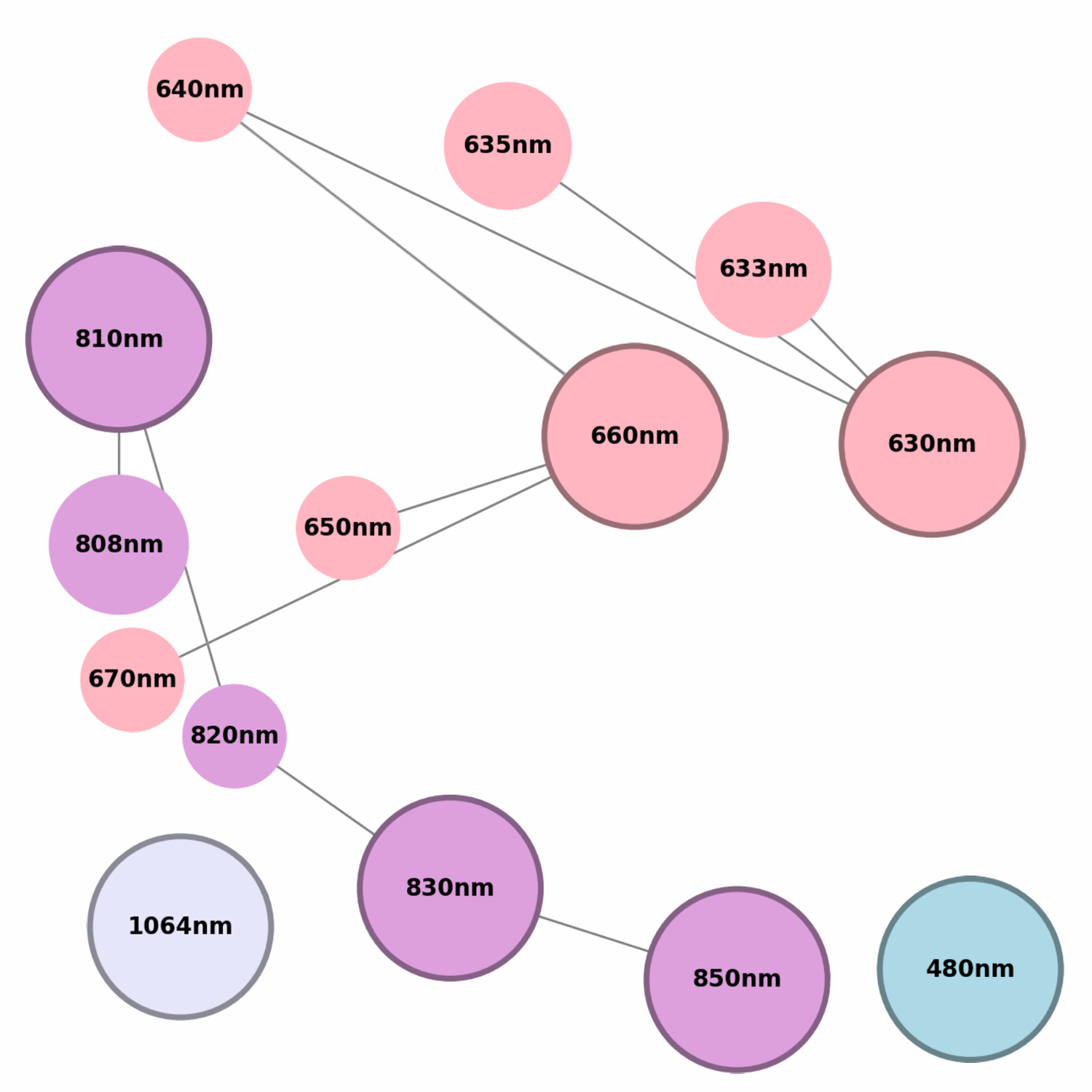
- Red Light Therapy is like a recipe for healing. The "ingredients" are specific, proven wavelengths of light. A device is only as good as the wavelengths it contains.
- Red Light Therapy is simply about extracting the most healing wavelengths from the electromagnetic spectrum (light that we can see and near infrared light that we can't see) and putting them in a device.
- It is more beneficial than just being in the Sun because the selected wavelengths that heal are built into the device at much greater power than what you get from the Sun, which helps them penetrate deep and heal your body.
- So it's obvious that the wavelengths emitted by the device are of PRIMARY Importance!
- The RLT Home Data-Driven ApproachTo determine the most effective "ingredients," we analyzed the data from 2,600+ human clinical studies. Our research identified the precise wavelengths with the highest success rates for the most common health goals.
Conditions Red Light Therapy Helps With:

Skin
Conditions covered: Skin rejuvenation, acne, facial filler-related adverse reactions, facial veins, skin non-deep wounds, melasma, psoriasis, dermatitis, scars, UV skin damage and erythema, vitiligo.
630nm, 660nm, 830nm, 810nm, 480nm

Pain
Conditions covered: Pain, inflammation, deeper wounds, ulcers, burns, tendon injuries, arthritis, osteoarthritis, fibromyalgia, back pain, neck pain, shoulder pain, knee pain, heel pain, neuropathy, carpal tunnel syndrome, tennis elbow, plantar fasciitis, TMD, muscle injuries, joint pain, sprain, strain, fracture, edema, swelling.
830nm, 630nm, 660nm, 810nm, 850nm. 1064nm

Athletic
Conditions covered: Weight/fat loss, adipose, lipoplasty, body contouring, post-exercise recovery, athletic recovery, sport recovery, muscle recovery, pre- and post-workout, fitness assistance, performance enhancement, endurance, strength building, fatigue, metabolism, mitochondrial betterment, energy, aerobic performance, anaerobic performance, cycling, running, swimming.
850nm, 810nm, 905nm, 660nm

Brain
Conditions covered: Alzheimer’s, anxiety, autism, bipolar disorder, cerebral conditions, cognitive health, concussion, depression, EEG, fMRI, functional connectivity, mental health, neurology-related conditions, Parkinson’s, psychiatric disorders, psychology, stroke, traumatic brain injury (TBI), memory function, attention improvement, focus and concentration, mood, dementia, ADHD, schizophrenia, OCD, PTSD, addiction.
810nm, 830nm, 850nm, 630nm, 870nm, 1064nm

Sleep
Conditions covered: Sleep, insomnia, circadian rhythm, melatonin related conditions, jet lag, sleep apnea, sleep disorders, sleep quality, sleep latency, REM sleep, deep sleep, slow-wave sleep, narcolepsy, restless leg syndrome, sleep paralysis, Kleine-Levin syndrome.
830nm, 850nm

Others
See all conditions that red light therapy may help with: human studies
2. Pillar 2: The "Dose" (Wavelength Density)
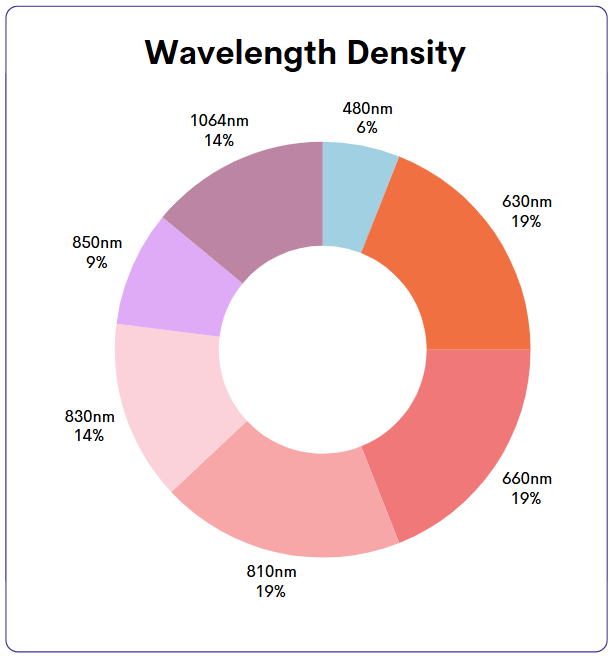
Having the right wavelengths is only half the battle. If they aren't delivered in a strong enough "dose," their effect will be minimal.
Many brands will claim to have 5 or 6 wavelengths, but they might only dedicate 2-5% of their LEDs to a critical wavelength. This is not enough to be truly therapeutic.
The Transparency Test: Ask for the "Spectrum Recipe"A trustworthy brand will be completely transparent about their wavelength density - the percentage of LEDs dedicated to each specific wavelength. If a brand hides these numbers, they are likely under-dosing key wavelengths.
3. Pillar 3: The "Power to Penetrate" (Irradiance)
Apples to Apples Comparison
Finally, even the perfect recipe of wavelengths and doses is useless if the device lacks the power (irradiance) to deliver that light energy deep into your body's tissues. When comparing brands, insist on seeing irradiance numbers measured with a Spectrometer. Some brands use cheaper solar power meters, which can inflate readings by 30-40%, making their devices seem more powerful than they truly are. High, transparently-measured irradiance is a hallmark of a clinical-grade device.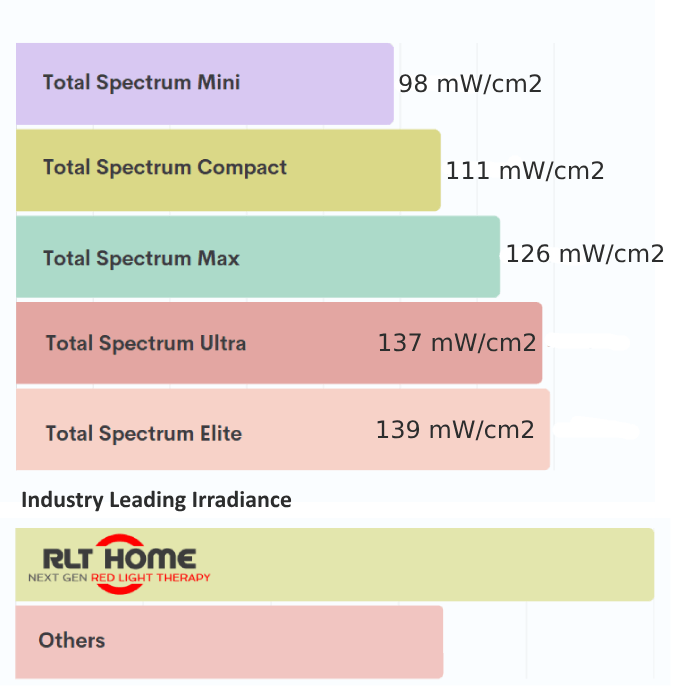
What About Other Features?

The Logical Conclusion: Why RLT Home is the Clinical-Grade Choice
Summary
This guide was designed to empower you to find the most effective device. Now, let's see how our Total Spectrum Series stacks up against the three pillars.✅ Pillar 1: The Right Wavelengths (Checked)
Our devices include all seven of the most clinically-proven wavelengths, optimized for a full spectrum of benefits from skin health to deep tissue repair.
480nm (6%), 633nm (19%), 660nm (19%), 810nm (19%), 830nm (14%), 850nm (9%) and 1064nm (14%)
✅ Pillar 2: The Right Dose (Checked)
We are completely transparent with our wavelength densities. As you can see above, each wavelength is delivered in a potent, therapeutic dose - one of the highest on the market.
✅ Pillar 3: The Right Power (Checked)
Our unique single-LED design and multi-beam lens system deliver industry-leading irradiance, measured transparently with a spectrometer, ensuring light penetrates deeply for maximum effect.
